
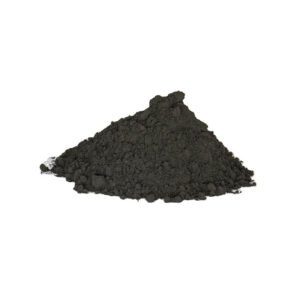
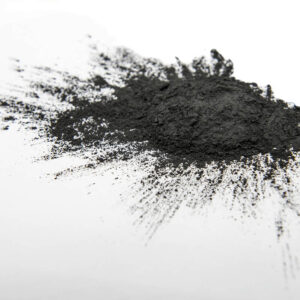
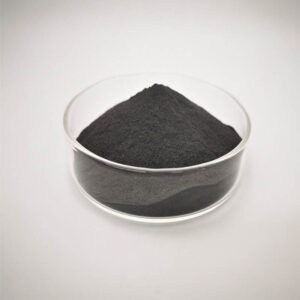
Nuclear grade boron carbide (B₄C) powder is a high-purity, specialized ceramic material primarily used for neutron absorption and shielding in nuclear reactors. It is the preferred material for reactor control rods and shielding assemblies due to its exceptional ability to capture thermal neutrons.
Key Properties
- Chemical Formula: B₄C (Boron Carbide)
- High Purity: Typically ≥99%, with ultra-high grades reaching 99.95%.
- High ¹⁰B (Boron-10) Content: Natural boron is ~19.9% ¹⁰B; nuclear-grade is often enriched to 60–95% ¹⁰B for maximum absorption efficiency.
- Crystal Structure: Rhombohedral
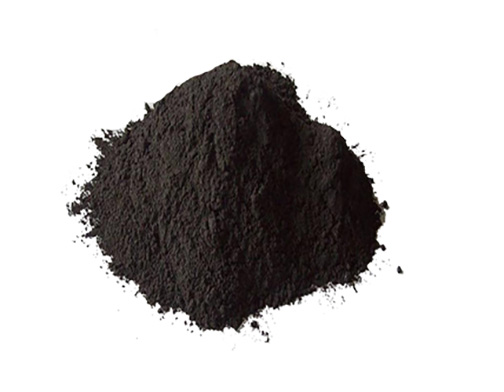
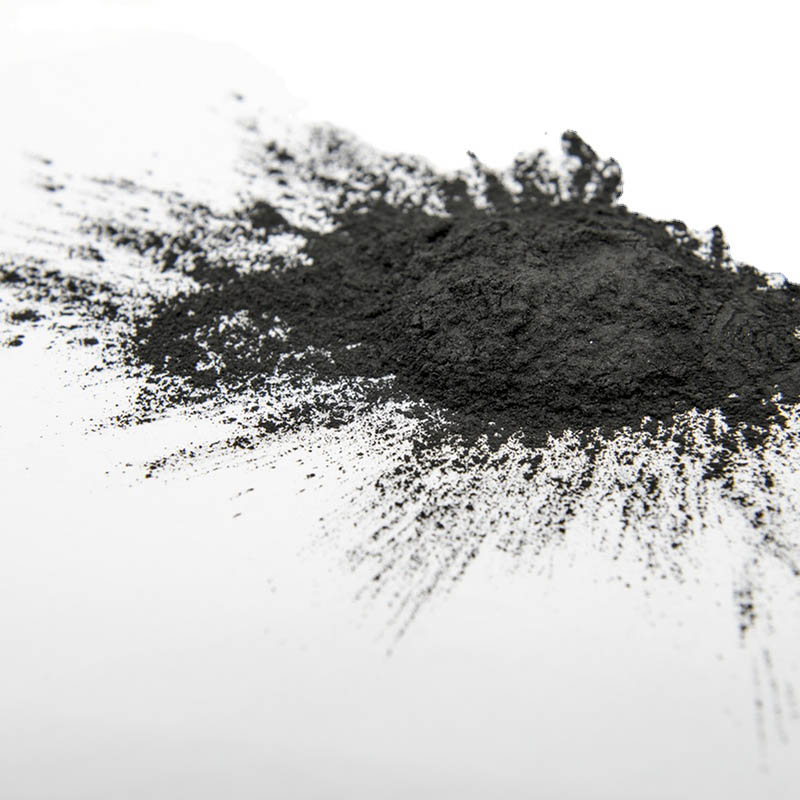
- Appearance: Fine grayish-black powder
- Density: ~2.52 g/cm³ (theoretical)
- Hardness: ~35 GPa (3rd hardest material, after diamond & cBN)
- Melting Point: ~2450°C
- Thermal Stability: Chemically inert and stable to >1000°C
Strict Impurity Limits (critical for nuclear performance):
- Total B + C ≥ 98%
- Free Carbon & Free Boron: Minimized
- Metal Impurities (Fe, Al, Si, etc.): < 0.1% (often < 10–50 ppm)
- Halides (F, Cl): Strictly controlled to prevent stress corrosion in stainless steel
Typical Specifications
- Purity: 99.0% – 99.95%
- Particle Size (D50): 0.5 μm – 50 μm (customizable)
- ¹⁰B Enrichment: Natural (19.9%) or enriched (60–95%)
Primary Nuclear Applications
- Reactor Control Rods–The most common use: Powder is sintered into pellets or solid components, then sealed in stainless steel or Inconel tubes to form control rods. Inserting/withdrawing these rods controls the fission chain reaction.
- Neutron Shielding
- Added as a filler to heavy concrete for biological shields.
- Hot-pressed into solid blocks for spent fuel storage casks and transport containers.
3,Pebble Bed & Special Reactors—Used directly as a fine particulate absorber in certain advanced reactor designs.